How Bass Feeding Behavior Changes Throughout the Spring
Understanding the Seasonal Movements That Turn Slow Lakes Into Feeding Grounds
Spring has a way of waking up a lake.
What looked quiet and lifeless through winter begins to stir. Crawfish move across rocky bottoms, baitfish drift toward warming coves, and bass begin shifting their habits in response to the season. For anglers who spend enough time on the water, these changes start to follow a rhythm.
Understanding how bass feeding behavior changes throughout the spring is one of the most useful pieces of knowledge an angler can carry into the season. Bass don’t simply become “more active.” Their diet changes, their movement patterns evolve, and their feeding windows expand as the spawn approaches.
Those shifts explain why a lure that produces fish in early March might suddenly stop working by mid-April.
For anglers willing to pay attention to what bass are feeding on and where those food sources are moving, spring can become one of the most predictable and productive fishing seasons of the entire year.
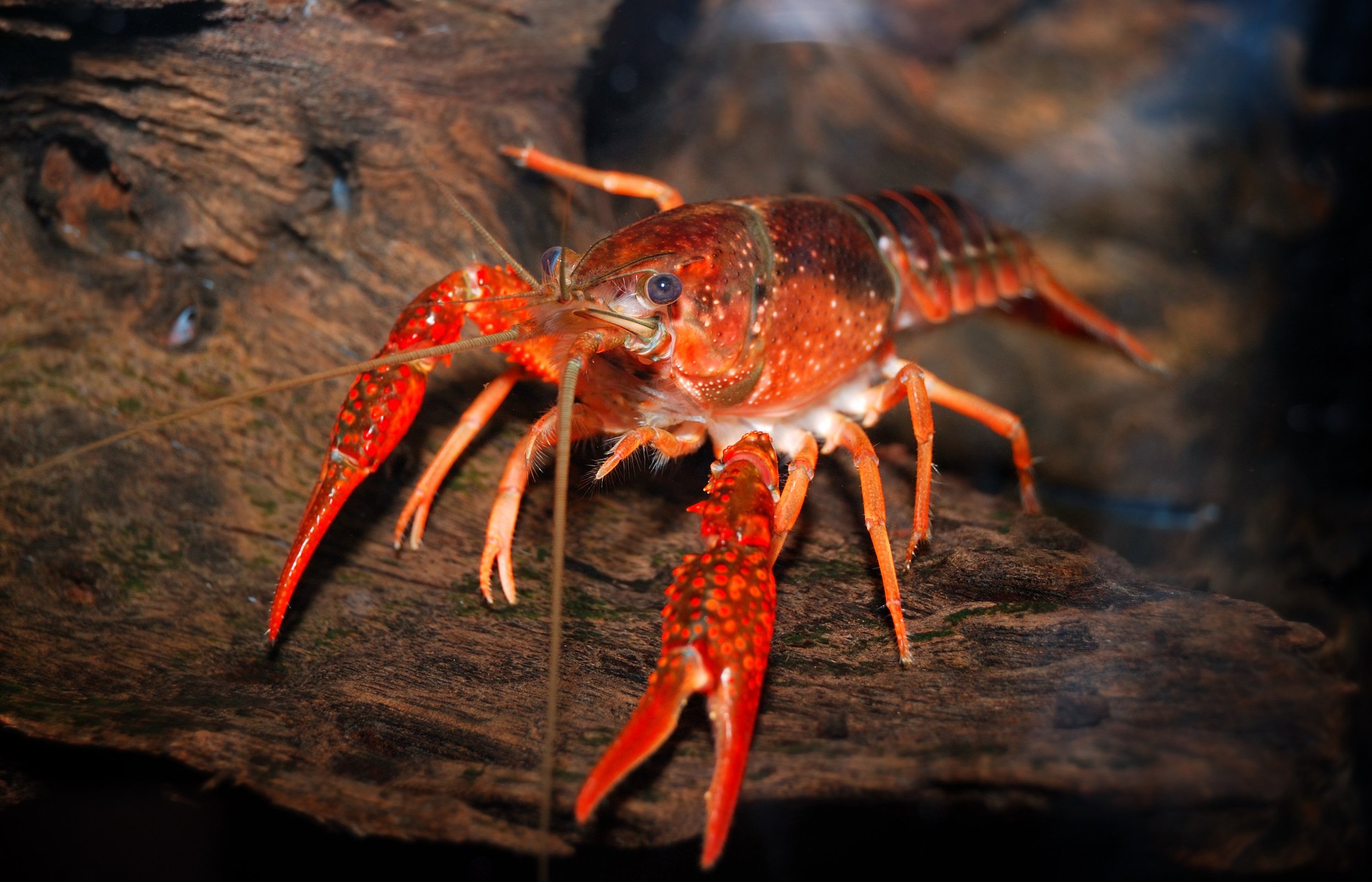
Early Spring: The Crawfish Pattern
In the earliest phase of spring, bass begin transitioning away from the deeper winter areas where they spent the colder months. They rarely rush straight to shallow water. Instead, they pause along staging structure that leads toward spawning flats.
Common early spring staging areas include:
rocky banks that warm quickly in sunlight
secondary points inside coves
submerged timber near shallow flats
channel swings that approach spawning areas
During this stage, crawfish often dominate the bass diet.
As water temperatures climb through the upper 40s and into the low 50s, crawfish become more active along rocks, wood, and gravel transitions. Bass respond by patrolling these areas slowly, feeding along the bottom as they prepare for the coming spawn.
Because of this, lures that imitate crawfish can become extremely productive.
Compact jigs paired with a realistic craw trailer are a staple among experienced anglers. Soft plastics such as the Strike King Rage Craw provide a natural kicking motion that resembles a fleeing crawfish when worked along rocks or submerged wood.
Fishing these presentations slowly along staging structure often produces strikes from bass that are still holding close to the bottom.
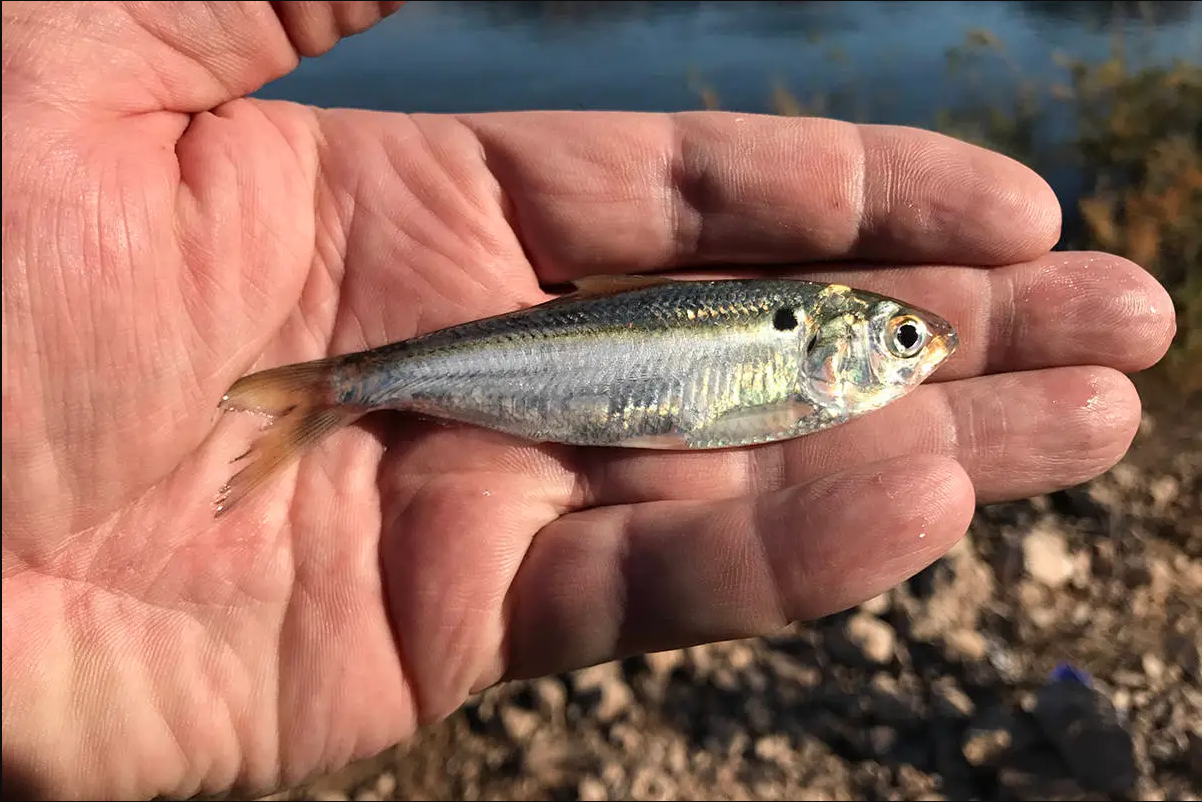
Mid-Spring: Baitfish Begin Moving Shallow
As the season progresses and water temperatures reach the mid to upper 50s, a noticeable shift begins taking place across most lakes.
Baitfish start appearing in shallow water.
Protected coves warm faster than the rest of the lake, especially those that receive steady sunlight and remain sheltered from heavy wind. These areas attract small forage species that are preparing to spawn.
Bass follow them.
Instead of hugging deep structure, bass begin roaming along shallow flats, grass edges, and shoreline cover where baitfish gather.
When bass are feeding on small fish rather than crawfish, moving baits suddenly become far more effective.
Spinnerbaits have long been a dependable choice for covering water during this stage. A well-balanced bait such as the Booyah Blade Spinnerbait produces both flash and vibration, making it easy for bass to detect even in slightly stained spring water.
Working a spinnerbait along wind-blown banks or through emerging vegetation allows anglers to locate fish that are actively hunting baitfish along the shoreline.
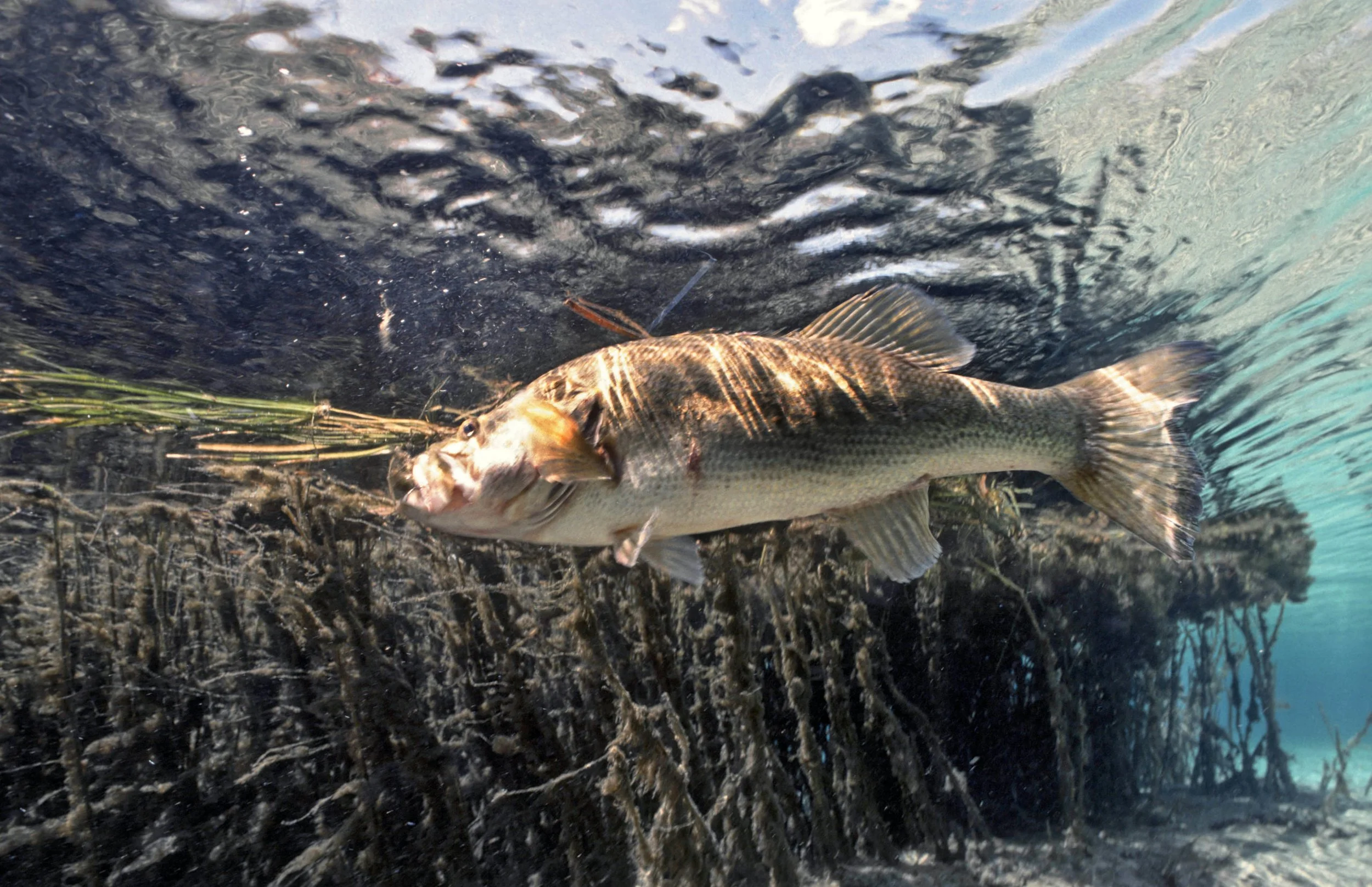
Grass Lines and Shallow Cover Become Feeding Lanes
One of the most consistent spring patterns occurs when bass begin using shallow cover as ambush points.
Grass edges, flooded brush, and submerged timber create natural feeding lanes where bass can trap baitfish against structure.
These areas often become even more productive when wind pushes across the lake. Waves and current push baitfish toward shorelines, creating concentrated feeding zones where bass can strike quickly.
Vibrating jigs have become a favorite among many anglers for fishing this type of structure. A lure such as the Z-Man Chatterbait produces a strong pulsing vibration that mimics the movement of fleeing baitfish.
When paired with a soft plastic trailer and retrieved steadily along grass edges or shallow timber, the lure produces a profile that bass can easily detect.
Strikes in these conditions are often sudden and violent, especially when bass are actively hunting in warming water.
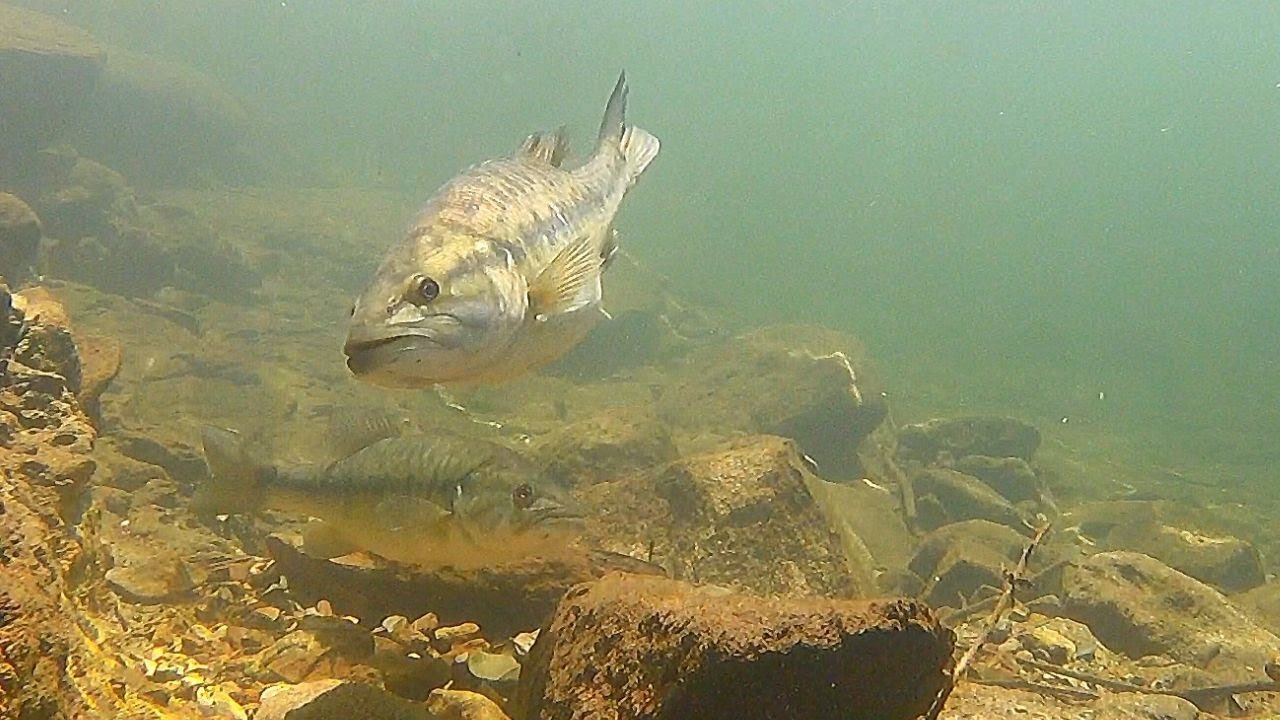
The Pre-Spawn Feeding Window
As water temperatures continue climbing toward the low 60s, bass begin entering the pre-spawn feeding phase.
This period is widely considered one of the best fishing windows of the entire year.
Large female bass begin staging near spawning flats while feeding heavily to build energy reserves. These fish often position themselves along nearby structure where food sources remain abundant.
Typical holding areas include:
points near spawning coves
submerged timber near shallow flats
rock transitions along protected banks
grass lines bordering shallow spawning areas
During this stage bass often respond aggressively to reaction baits.
Lipless crankbaits are particularly effective because they allow anglers to cover large areas quickly while imitating baitfish that have moved into shallow water.
A lure such as the Strike King Red Eye Shad produces a tight vibration and internal rattle that bass can detect easily even when water clarity is reduced.
Fishing a lipless crankbait across shallow flats or along vegetation edges frequently triggers reaction strikes from bass preparing for the spawn.
Matching the Spring Menu
Bass rarely feed randomly. Their behavior is strongly influenced by the food sources available within the lake.
During spring, the primary forage species bass target typically include:
crawfish along rocky structure
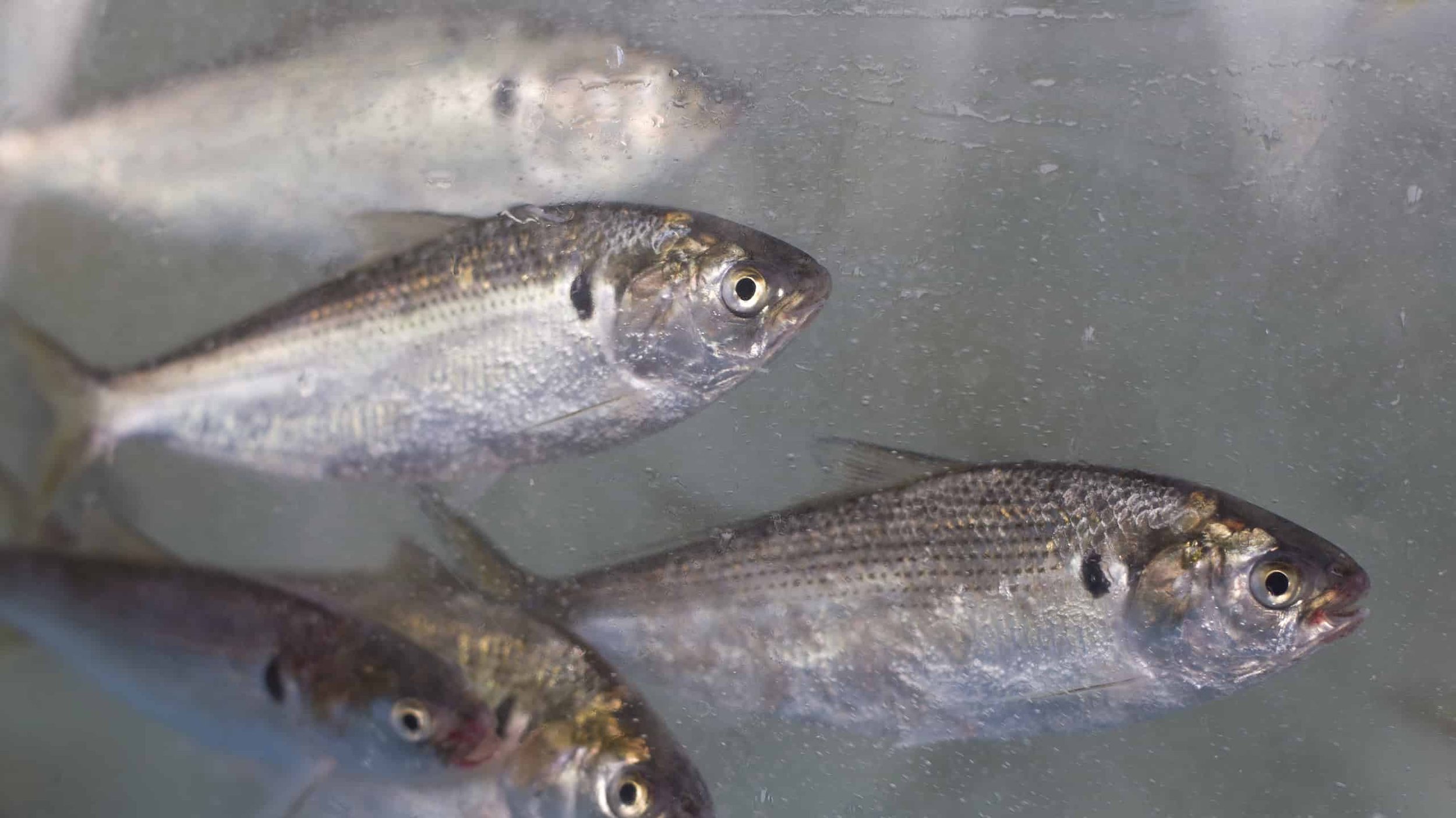
shad moving into warming coves
small baitfish near grass or timber
bluegill around shallow cover
Matching lures to these natural food sources often produces far better results than simply casting whatever happens to be tied on.
Color patterns tend to follow the same logic. Crawfish imitations often perform best in shades of red, brown, or green pumpkin, while baitfish patterns frequently feature white, silver, or shad-colored finishes.
Anglers who pay attention to what bass are feeding on can adjust their lure selection accordingly and stay in step with the lake’s natural rhythm.
Feeding Windows and Weather Changes
Spring weather rarely stays stable for long.
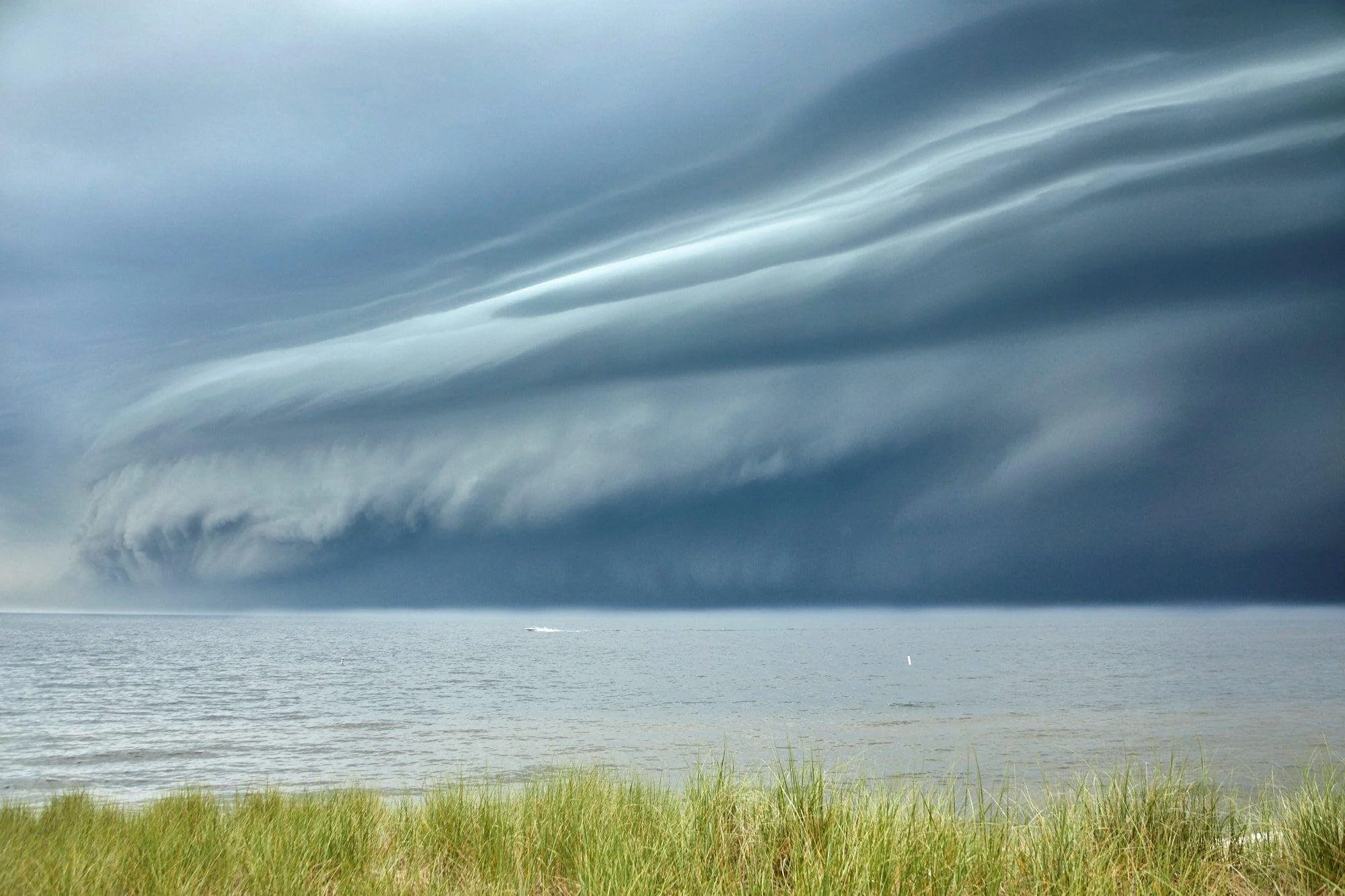
Wind shifts, passing storm fronts, and falling barometric pressure can dramatically influence bass feeding behavior. When these conditions align with seasonal feeding patterns, the results can be remarkable.
Storm fronts often push baitfish toward shorelines while simultaneously triggering aggressive feeding among bass.
These brief windows of activity can transform a quiet day on the lake into a sudden feeding frenzy.
In fact, some of the most productive fishing of the season occurs in the hours leading up to a spring storm, when wind, cloud cover, and falling pressure combine to stimulate feeding behavior across the lake.
If you want to understand exactly why those conditions ignite the bite, it helps to look at how approaching storms affect bass behavior and feeding activity, which we explored in the previous article.

Preparing for Changing Spring Conditions
Understanding spring feeding behavior is only part of the equation.
Successful anglers often prepare by carrying several rod setups and lure styles that allow them to adapt as the day unfolds.
Having the right gear ready makes it possible to switch from slow bottom presentations to fast-moving reaction baits without missing the moment when fish begin feeding.
In the next article, we will take a closer look at spring bass fishing gear and rod setups that allow anglers to cover water efficiently and adjust quickly to changing weather and feeding patterns on the lake.