When Storms Roll In, Bass Go on the Hunt
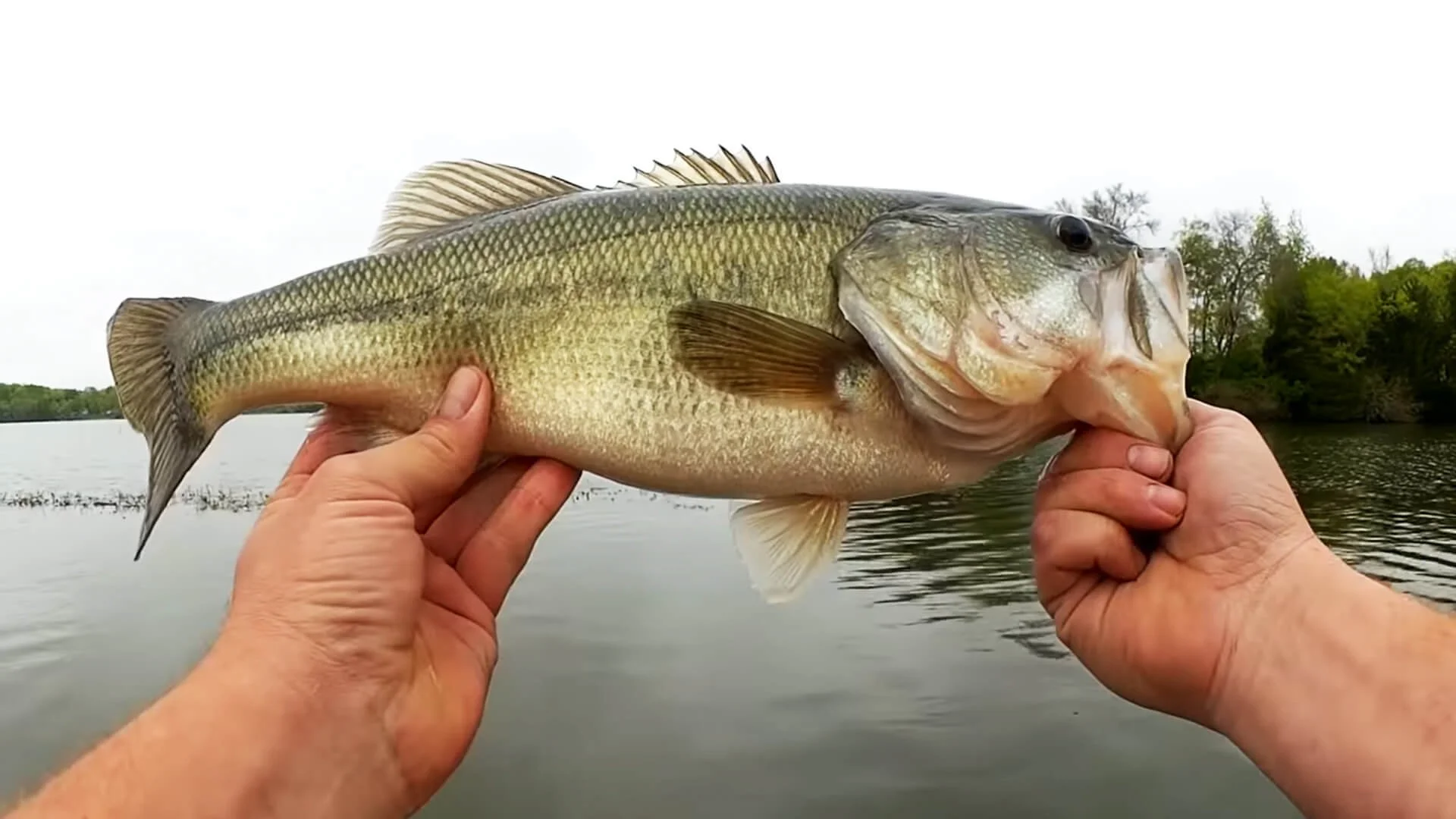
How Falling Pressure and Spring Storm Fronts Trigger Aggressive Feeding
Spring fishing often rewards anglers who pay attention to the sky as much as the water.
A storm building on the horizon changes the entire mood of a lake. The wind begins to push across the surface, clouds darken the water, and baitfish start to scatter along the shoreline. The lake feels alive in a different way. For bass, these conditions often signal opportunity.
Some of the most aggressive feeding windows of the spring occur in the hours leading up to a storm front. Anglers who understand how pressure, wind, and light affect bass behavior can turn these brief windows into some of the most productive fishing of the season.
Falling Barometric Pressure Changes Fish Behavior
As a storm approaches, barometric pressure begins to fall. Fish sense this shift through their swim bladder, which acts as a natural pressure gauge.
When pressure drops, bass often become more active and move away from heavy cover. The conditions encourage them to roam and feed, especially along shallow banks and transition areas where baitfish gather.
Low pressure also tends to reduce the caution that bass show during stable weather. Instead of holding tight to structure, they begin chasing prey. Reaction strikes become far more common during this period.
For anglers, this means covering water quickly with moving baits becomes an effective strategy.
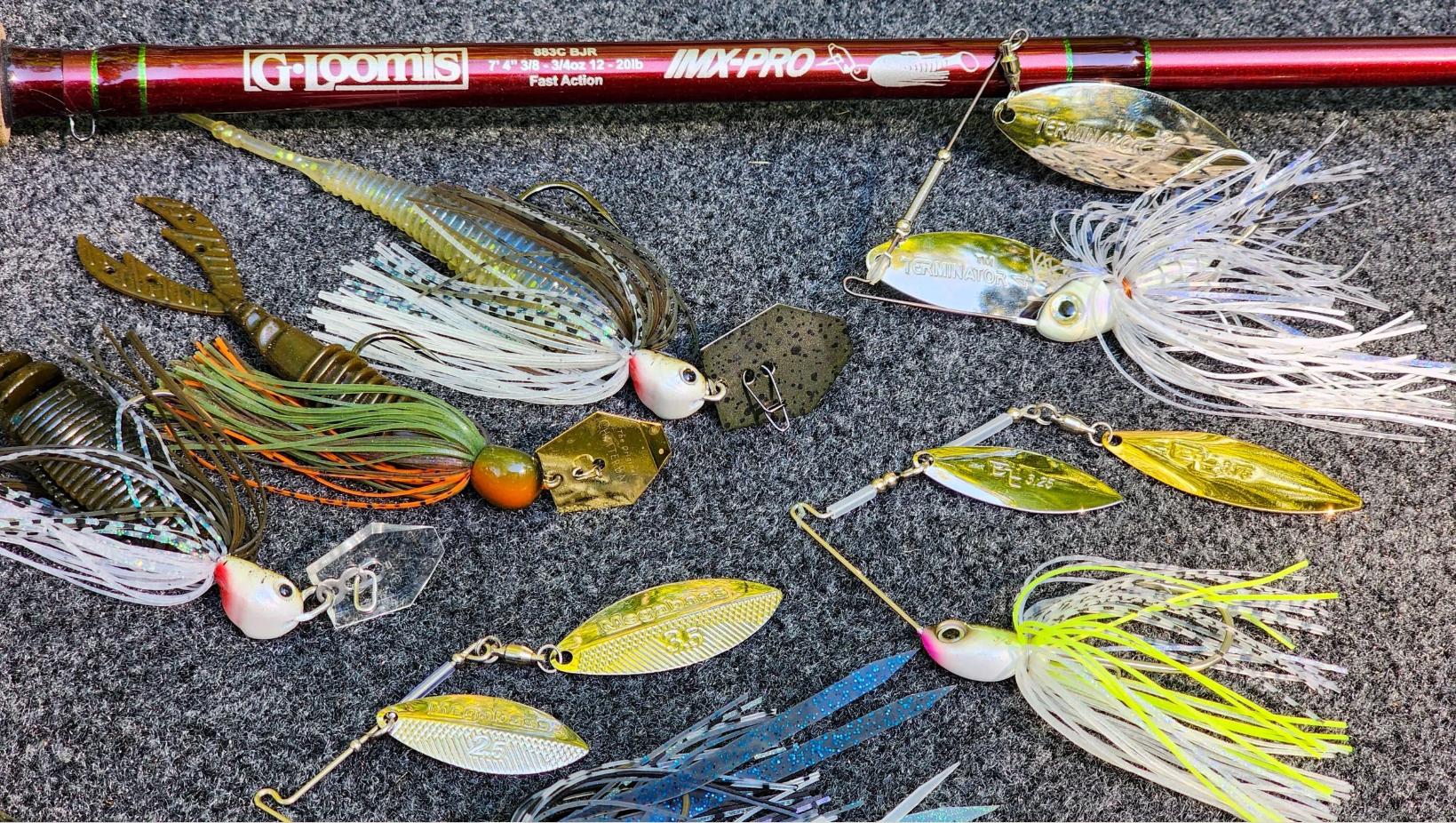
Spinnerbaits are a classic choice when the wind picks up and visibility drops. A reliable option many anglers keep tied on in spring is the Strike King Premier Plus Spinnerbait, a durable design that produces strong flash and vibration in stained water. Spinnerbaits like this allow anglers to work wind-blown banks efficiently while triggering aggressive reaction strikes.
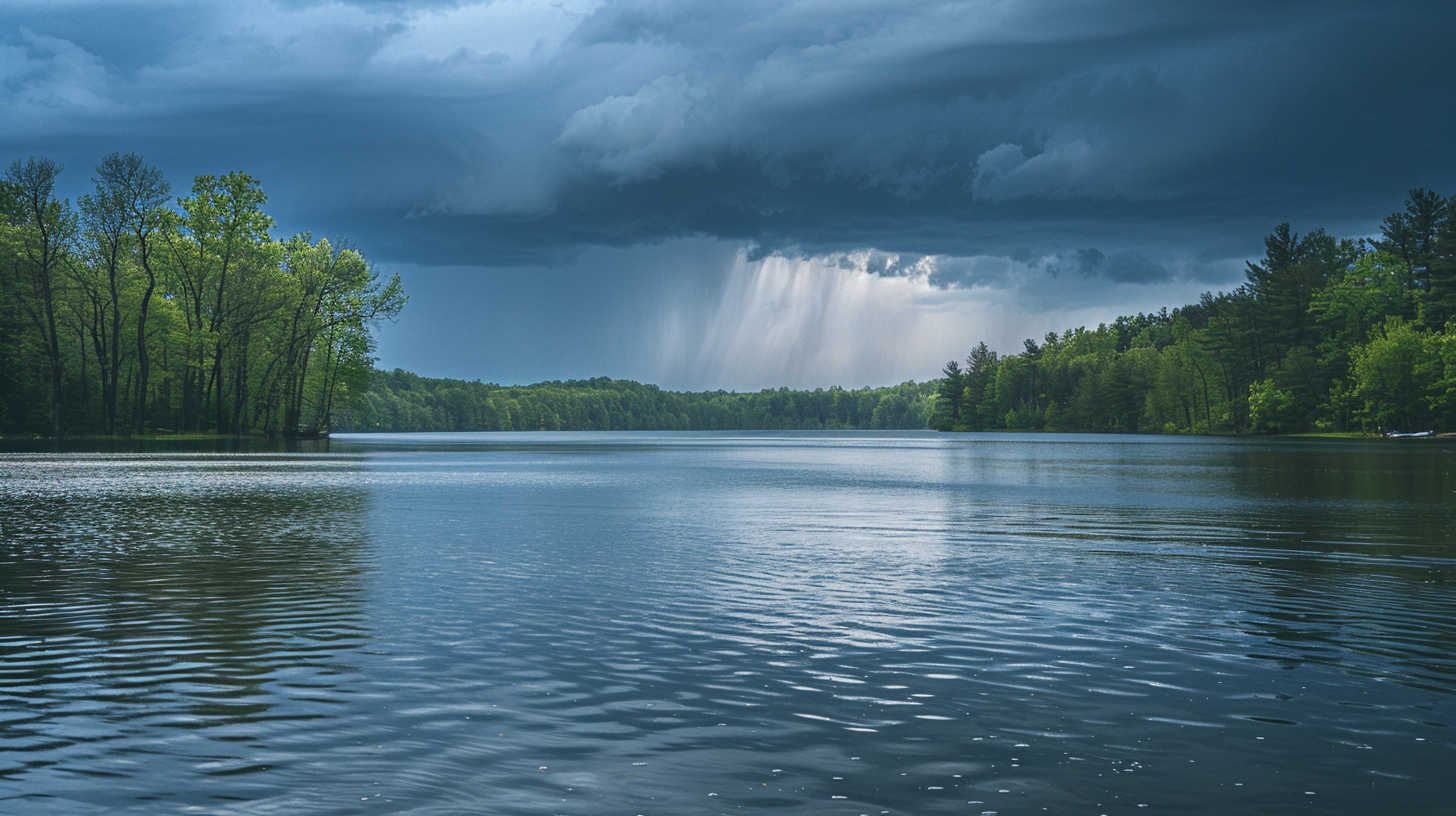
Wind Pushes Baitfish Into Feeding Zones
Storm fronts rarely arrive quietly. Wind almost always precedes them, and that wind reshapes the entire food chain of a lake.
Wind pushes plankton toward the shoreline. Baitfish follow the plankton, and bass follow the baitfish. This chain reaction creates natural feeding lanes along wind-blown banks, points, and grass edges.
Many experienced anglers immediately begin targeting banks that face the wind when a storm approaches. These areas often concentrate bait and create prime ambush opportunities.
Vibrating baits perform especially well in these conditions because bass rely more heavily on vibration and movement when waves disturb the water’s surface.
Chatterbaits are particularly effective here. The Z-Man Chatterbait Jack Hammer Evergreen Custom Bladed Jig, widely available through major outdoor retailers, produces a strong pulsing vibration that bass can track even in murky water. Pairing a chatterbait with a soft plastic trailer creates a profile that resembles fleeing baitfish pushed by wind.
Slowly working this setup along grass edges or shallow points can produce explosive strikes during the hours before a storm.
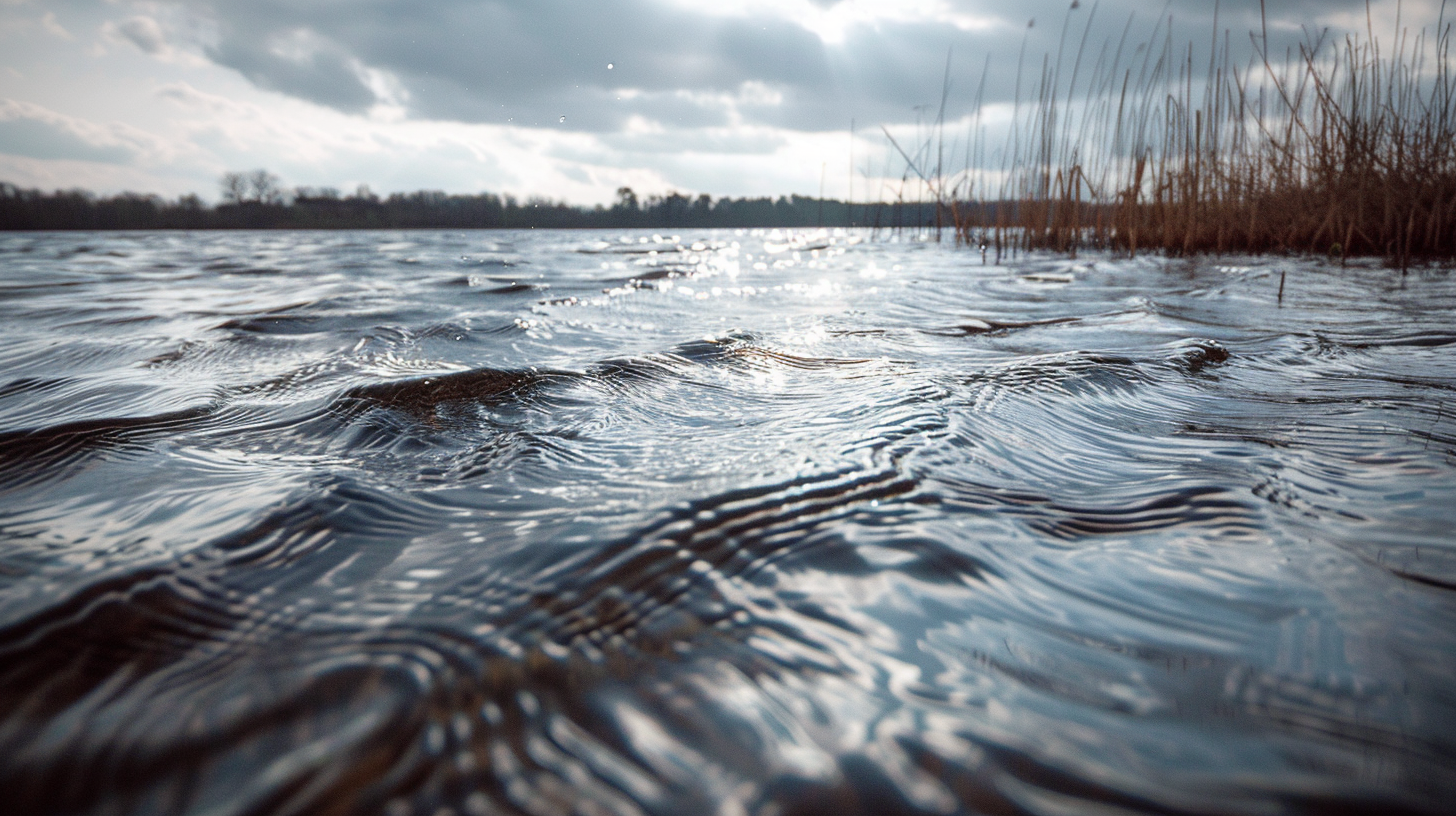
Cloud Cover Expands the Strike Zone
Bright spring sunlight can sometimes push bass deeper into cover. Storm clouds change that dynamic quickly.
Cloud cover reduces light penetration into the water, which allows bass to move into shallower areas without exposing themselves. Predatory fish gain an advantage in these dim conditions because prey species struggle to detect movement as easily.
During these periods bass often hunt along:
shallow flats
grass lines
secondary points
flooded brush
Reaction baits become extremely effective when bass are roaming in these areas.
Squarebill crankbaits are particularly useful because they can deflect off wood and rock without snagging easily. A bait like the Strike King KVD Squarebill Crankbait allows anglers to fish aggressively around shallow structure while maintaining a natural baitfish presentation.
The erratic deflection of a squarebill often triggers strikes from bass that are already primed to feed as storm pressure builds.
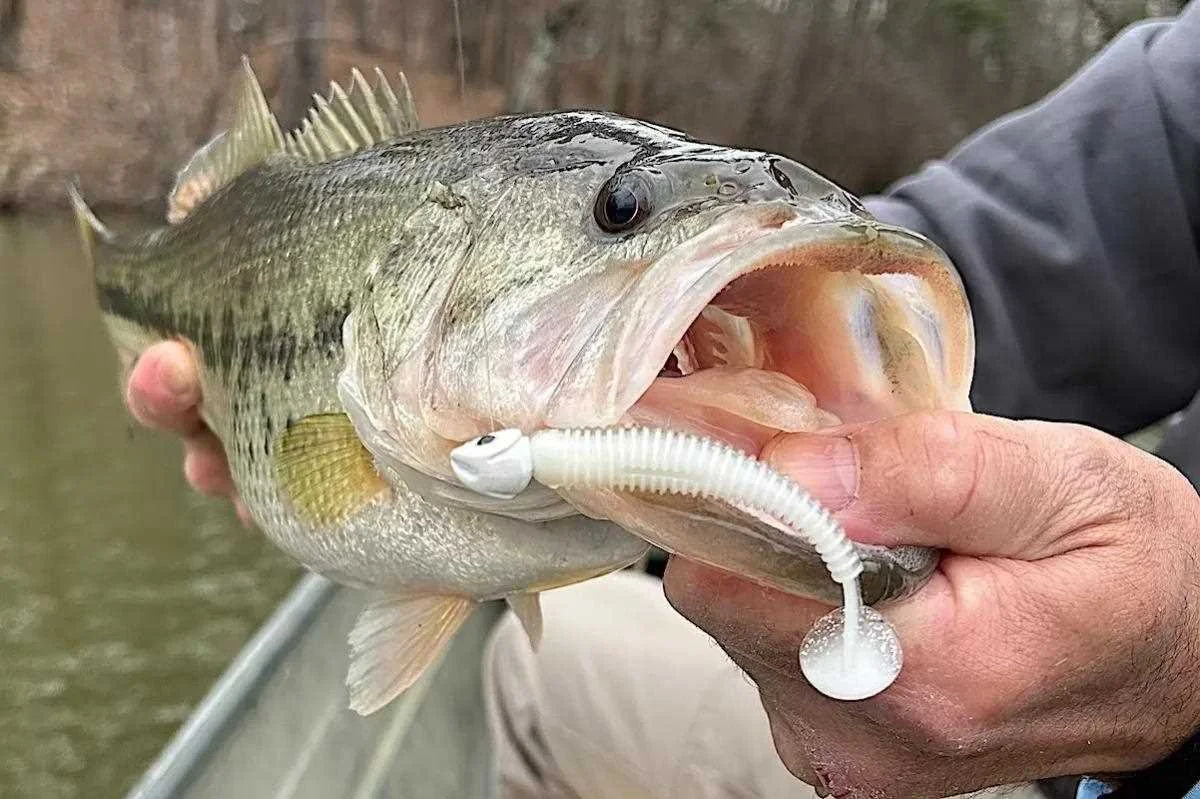
Stained Water Calls for Vibration and Contrast
Spring storms frequently stir up sediment and reduce water clarity. In these conditions bass rely less on sight and more on vibration and contrast to locate prey.
Lures that create sound, flash, or vibration become easier for fish to detect.
Some of the most effective options include:
spinnerbaits
lipless crankbaits
chatterbaits
dark-colored jigs
Lipless crankbaits are especially useful for covering shallow water quickly. Baits like the Strike King Red Eye Shad produce a tight vibration and internal rattle that allows bass to locate them in turbulent water.
Working a lipless crankbait across flats or along grass edges can imitate baitfish that have become disoriented during the wind and waves of an approaching storm.
Key Locations Before a Spring Storm
Storm-driven feeding activity rarely occurs randomly across the lake. Certain areas consistently attract bass during these weather shifts.
Wind-blown banks often become the most productive zones because they concentrate baitfish. Secondary points near spawning flats can also hold aggressive fish that are staging during the pre-spawn period.
Other reliable locations include:
creek channel swings
shallow grass lines
submerged timber near flats
rocky banks receiving wind
When a storm approaches, the most effective approach is often moving quickly between these high-percentage areas until feeding fish are located.
Once bass begin striking, the action can become fast and aggressive.
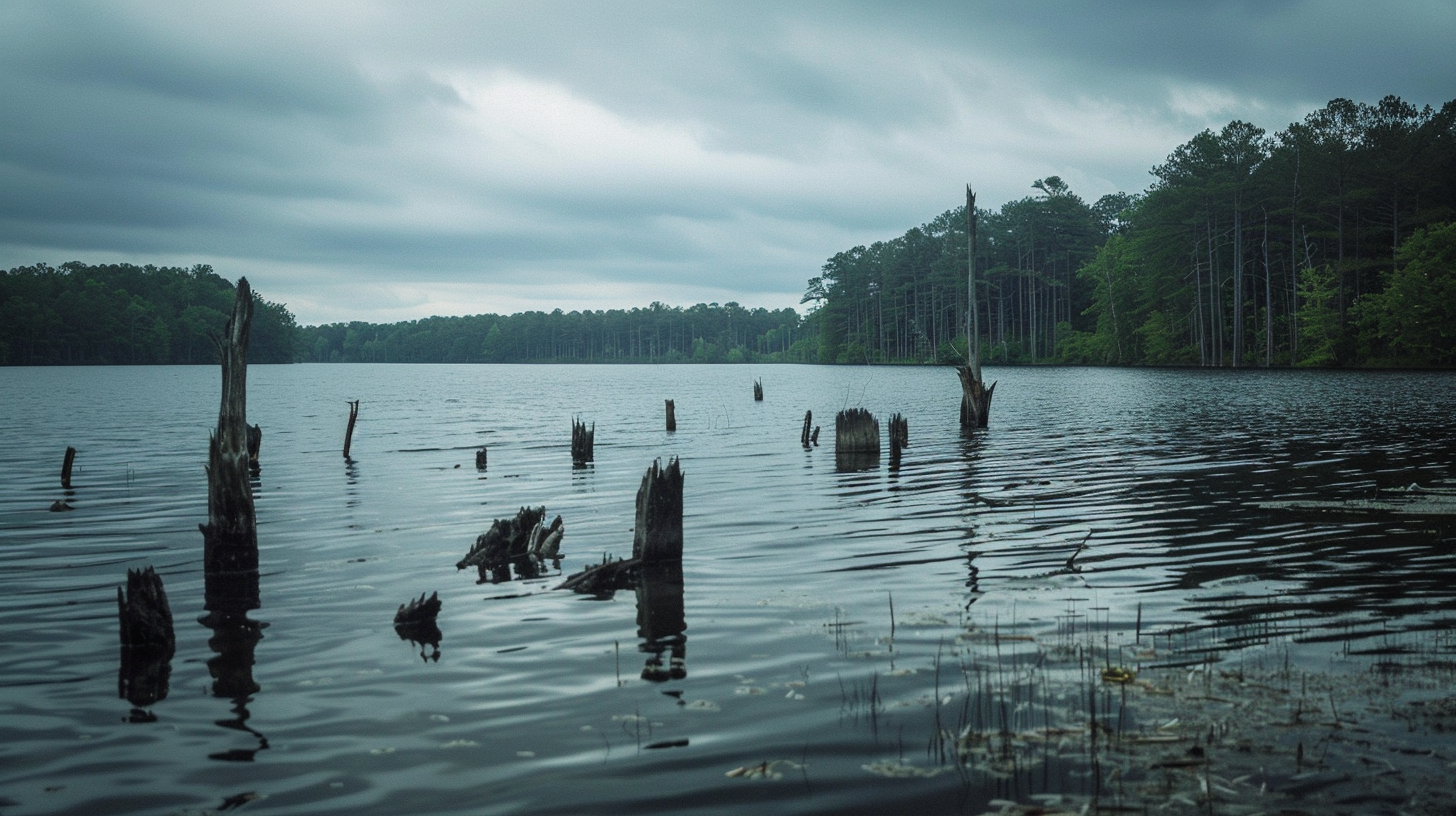
The Short Window Before the Storm
One of the most fascinating aspects of pre-storm fishing is how quickly the window can open and close.
In many cases, the best bite occurs in the one to two hours before the storm arrives. During this time falling pressure, wind, and darkening skies combine to create ideal hunting conditions for bass.
After the storm arrives, activity can slow as pressure stabilizes and fish settle back into cover.
For anglers who enjoy dynamic conditions, spring storms provide some of the most exciting fishing of the entire season. Paying attention to weather patterns and positioning yourself on wind-blown structure can transform a quiet day on the lake into a memorable one.
Understanding these storm-driven feeding windows becomes even more powerful when combined with knowledge of how bass feed during the spring season itself. The warming water of early spring triggers specific feeding patterns that explain why these storm periods can become so explosive.
In the next article, we will look at how bass feeding behavior changes throughout the spring, and how understanding the seasonal movement of baitfish, crawfish, and spawning bass can help anglers choose the right presentations for every stage of the season.